The clifftop viewpoints are easy and almost always worth it. The lighthouse itself depends on weather, access and a steep descent — so plan that part with your eyes open.
Access rule
South Stack is weather-dependent: island access and lighthouse tours can close at short notice, and reaching the light means a steep descent of around 400 steps. Check current lighthouse access before you set off — the clifftop viewpoints are worth it either way.
Time needed
45–90 min viewpoints & cliffs · 2–3 hr with the lighthouse tour and descent
Start point
RSPB South Stack visitor centre & car park, near Holyhead
Difficulty
Easy at the upper viewpoints; strenuous to the lighthouse~400 steps
Main planning gate
Weather & island access — tours are not guaranteed
Facilities
RSPB café, shop & toilets near the centre; none on the lighthouse island
Best season
Spring for breeding seabirds; choughs along the cliffs all year
Tours
Guided tours, book ahead (Trinity House)
Car-free
Difficult without a car — car recommended
Plan with confidence.Parking, opening, lighthouse tours, toilets, café, getting there without a car, dogs, accessibility, safety and drones.
Parking & fees
Use the RSPB South Stack car park by the visitor centre. Parking charges can change — go by the current RSPB charges page rather than older figures.
Opening & access
The reserve and car park can keep different hours from the visitor centre, café, toilets and the lighthouse tours, and any of them can close at short notice.
Lighthouse tours
When
Weather permitting; tours and island access can close at short notice.
Tickets
Buy at least 60 minutes before your tour.
Tour length
About 20–40 minutes, depending on group size.
To climb the tower
Minimum height 1.1 m.
Payment
Card payments accepted.
Getting there
Reaching the tower means descending around 400 steep steps and crossing the bridge when access is open.
RSPB toilets, an accessible toilet and baby-change are at the visitor-centre area, alongside the café and shop. There are no facilities on the lighthouse island, and no toilets in Elin’s Tower.
Café & refreshments
The RSPB café is near the visitor centre. Hours change with the season, so carry water for the cliffs and the steps.
Getting there without a car
Car-free access to South Stack is possible, but it needs planning. The nearest useful rail station is Holyhead, around 3 miles from South Stack according to Trinity House, with onward travel by taxi, bike or a long walk. Don’t assume there is a convenient bus to the lighthouse itself; services vary. The final lighthouse visit also involves a steep descent of around 400 steps, and island access depends on advertised opening hours and conditions.
Nearest rail station
Holyhead (HHD).
Interchange
Holyhead station / Holyhead Bus Port.
Onward distance
Roughly 3–4 miles / 5–6.5 km, depending on route and exact endpoint.
Bus access
Bus services vary through the year.
Final stretch
Taxi recommended; a long walk or cycling for suitable visitors.
Car-free rating
Difficult without a car — car recommended.
Live planning
Traveline Cymru / Transport for Wales.
Before you travel
Public transport routes and times can change through the year.
Dogs are welcome on the RSPB reserve and in Elin’s Tower, but not inside the café; assistance dogs are welcome in all parts of the reserve. Keep dogs under control and stick to the paths. Access rules for the lighthouse island are set by the lighthouse operator, so don’t assume you can take a dog across.
Accessibility
Level route
From Elin’s Tower car park to the viewpoint outside Elin’s Tower.
Centre to Elin’s Tower
The route between the visitor centre and Elin’s Tower has 25 uneven steps.
Coastal trail
More rugged, uneven and narrow.
The lighthouse
Not step-free — see the descent details above.
Plan around it
The upper viewpoints suit far more visitors than the descent does.
Safety & drones
This is an exposed cliff landscape: wind, uneven paths, steep steps and moving sea. Wear proper footwear, keep back from cliff edges, watch children and dogs, and don’t start the descent if the weather or your footing feels wrong. Exposed coast — in an emergency call 999 and ask for the Coastguard.
RSPB operates a no-drones policy on the reserve from 1 March to 31 July to protect breeding birds.
What to bring
Water
Windproof layer
Sturdy footwear
Binoculars optional
Charged phone
Card for parking
Sun or rain cover
Patience for the weather
Atlas of Wales Discovery Highlight
The landmark is below you.
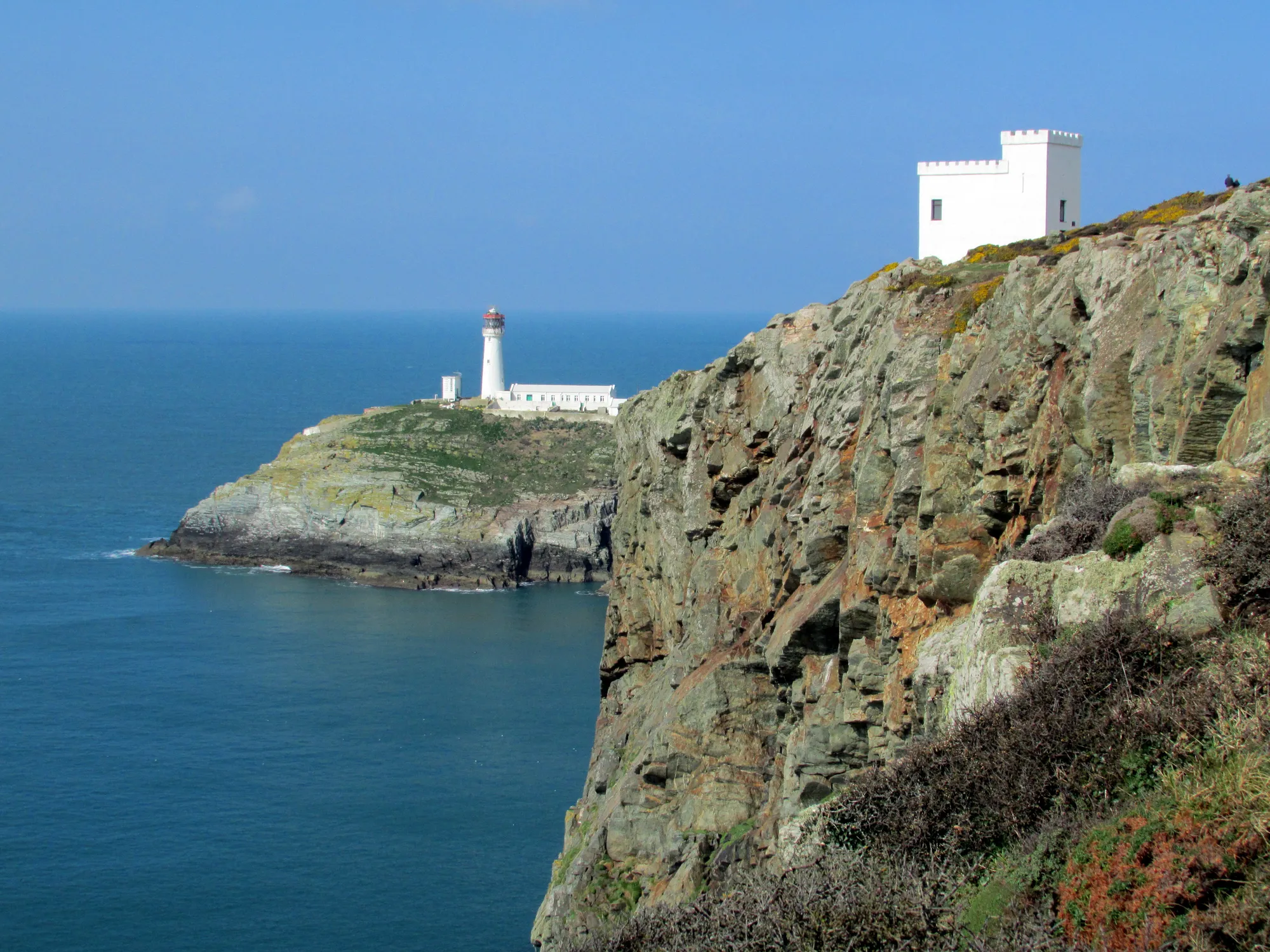
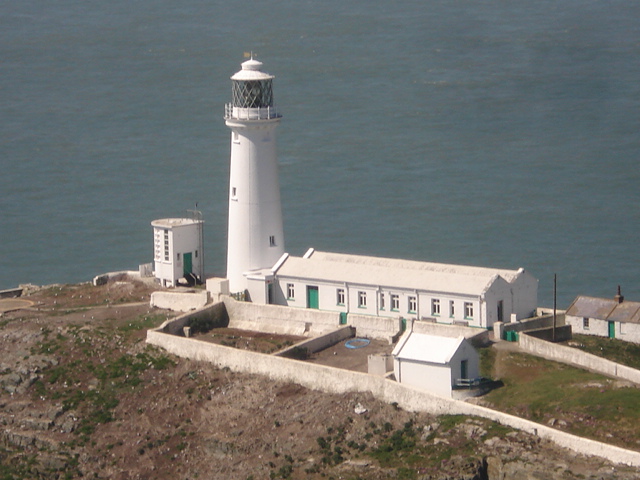
Most lighthouse visits build towards a tower on the horizon. South Stack does the opposite. You arrive high on the cliffs, then look down: white walls, the bridge, sea moving in the gap, and the Irish Sea opening beyond.
The visit becomes a descent — from heathland and cliff edge down to a working sea light. That inversion is the thing people remember.
Where the land drops away to the light.
Atlas of Wales Verdict
Should this shape your day?
Worth it for the edge-of-Anglesey drama, not for a casual flat stroll.
Good fit for
lighthouse & coastal photography
dramatic Anglesey viewpoints
spring seabirds and choughs
walkers happy on exposed cliff paths
anyone happy to plan around the weather
Think twice if
you need step-free access to the lighthouse
you dislike exposed cliff edges or strong wind
you want a low-effort visit with very small children
you’re bringing a dog and specifically want the lighthouse island
you’re relying on public transport and haven’t planned the stretch from Holyhead
Weather & access decide the day
the upper viewpoint and Elin’s Tower are far easier than the descent
tours and island access can close at short notice
car-free is possible, but the final stretch needs planning
Elin’s Tower and the cliffs first, then the descent — only if it’s open and conditions feel sensible.
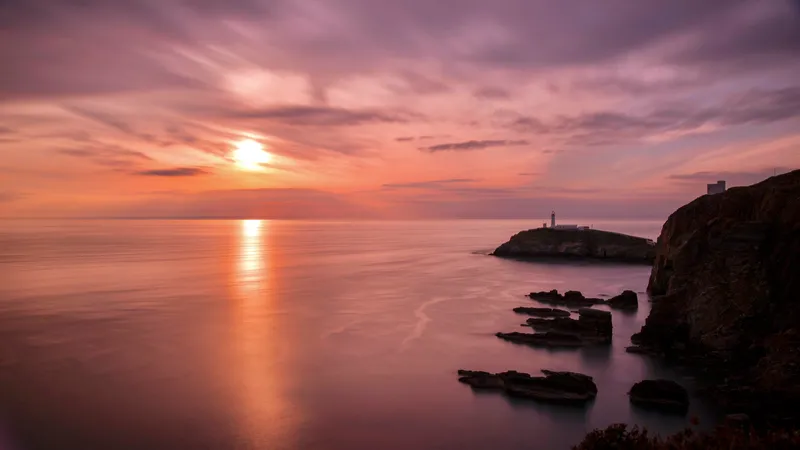
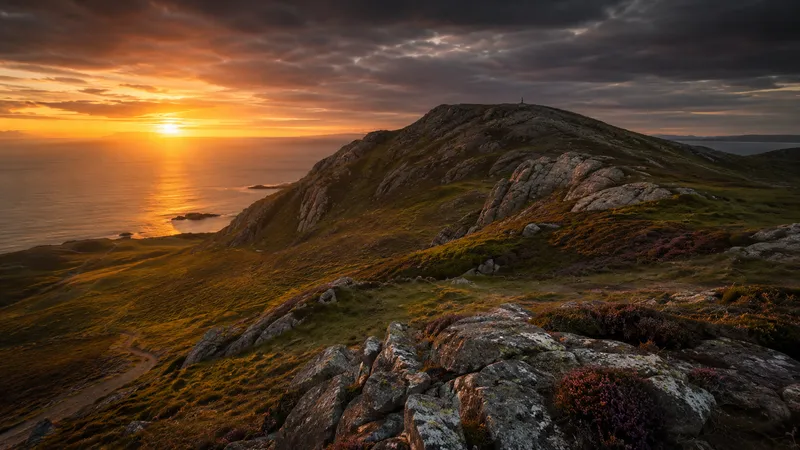
When the light earns its name — South Stack at sundown.
How your visit unfolds
One descent, seven scenes.
See the shape of the visit before you commit to the steps.
01 Arrive
Clifftop car park, RSPB centre, first taste of the wind.
02 The edge
Sea on three sides, open sky, the cliffs falling away.
03 Elin’s Tower
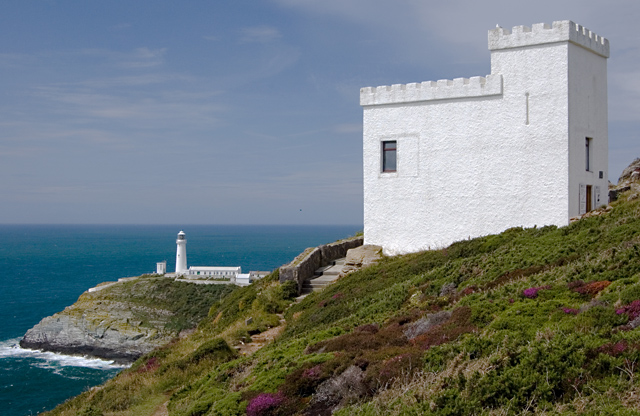
The classic view: white tower and island far below.
04 The steps
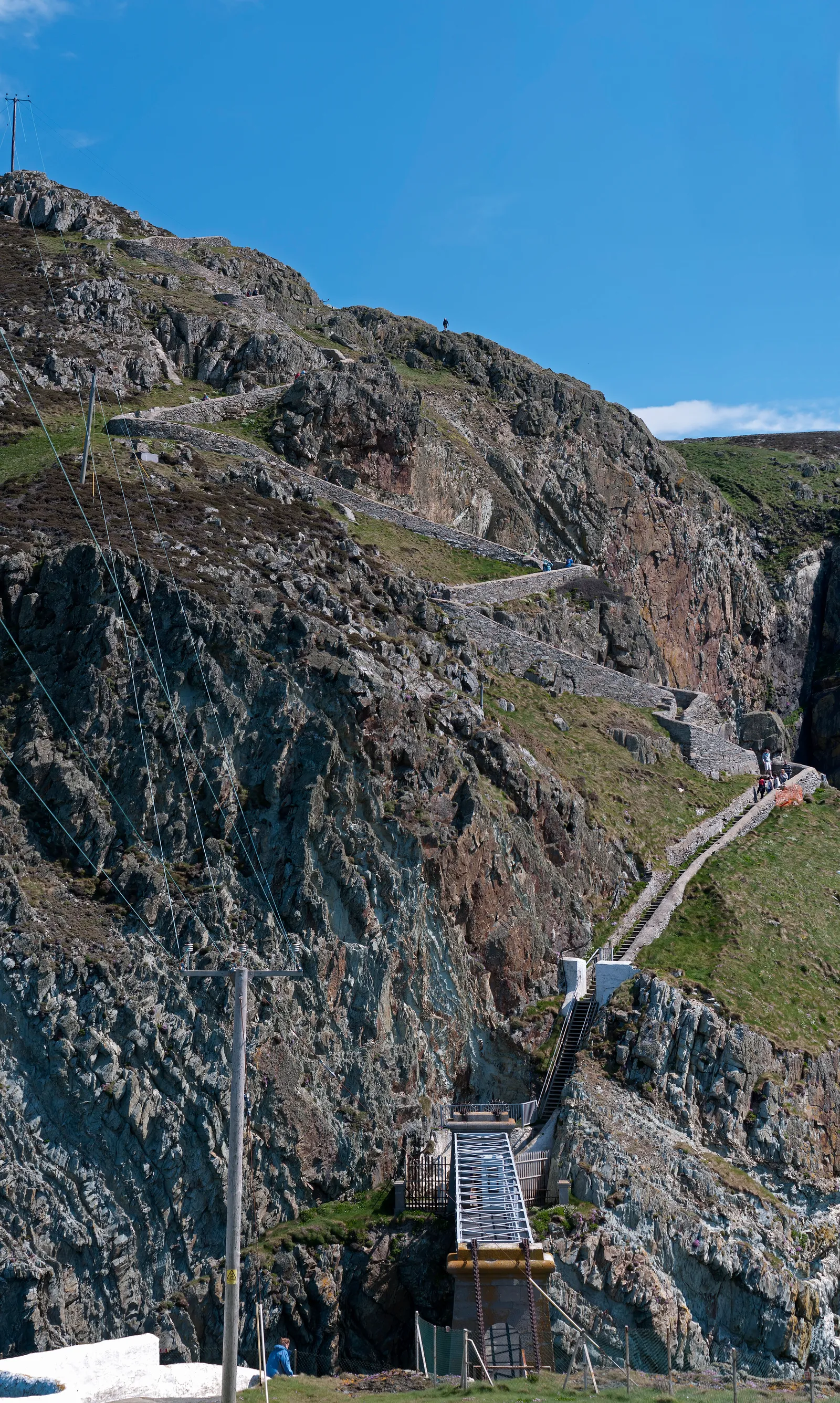
Around 400 of them, switchbacking down to the bridge.
Access check essential
05 The bridge
A short crossing over moving sea makes the gap real.
06 The light
Lantern, lens and keepers’ story — a working sea light.
07 The birds
Climb back slowly, then give the cliffs time.
South Stack, in pictures
Seen from the cliffs.
Tower, bridge, steps and sea — the visit before you make it.
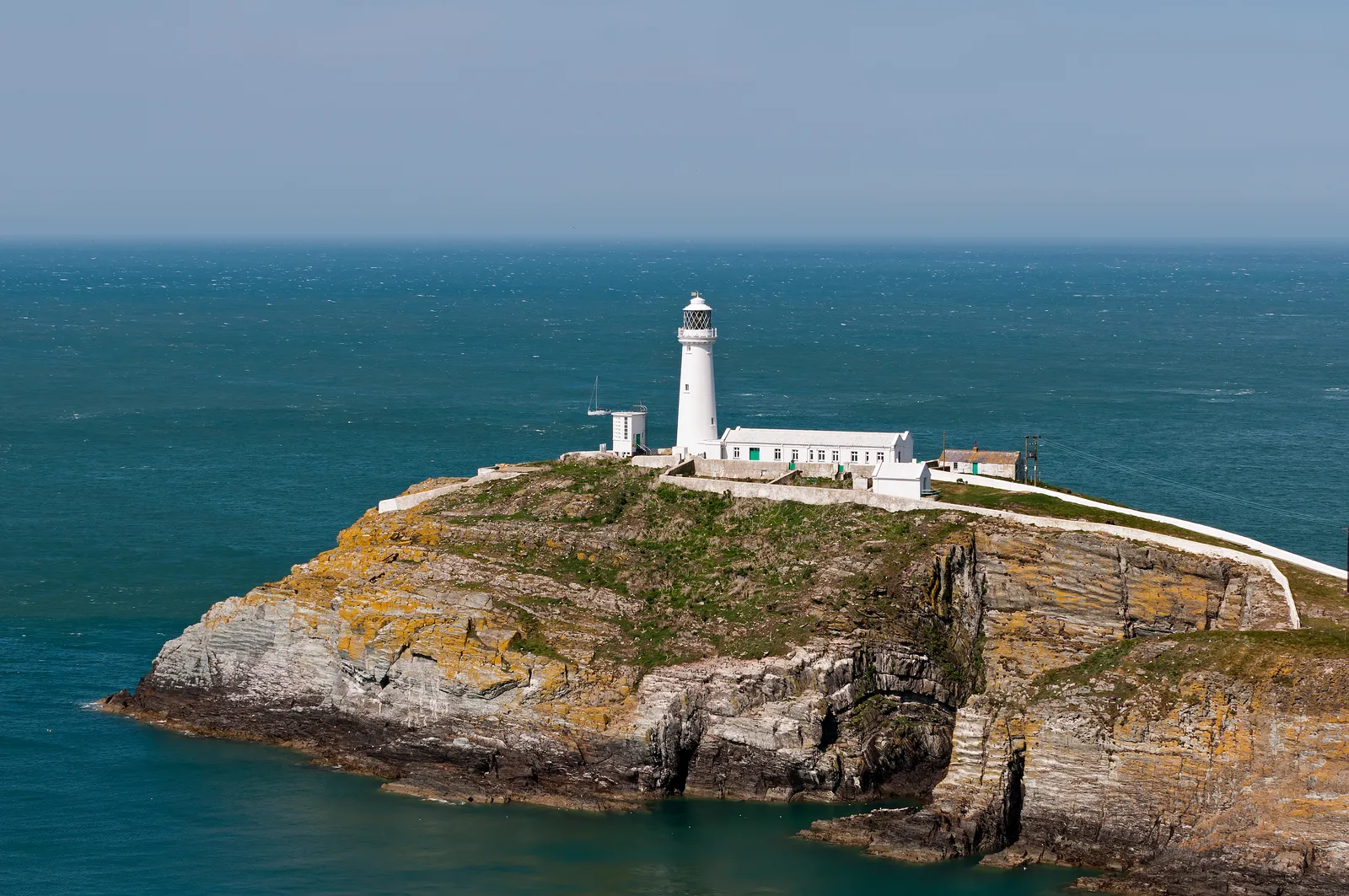
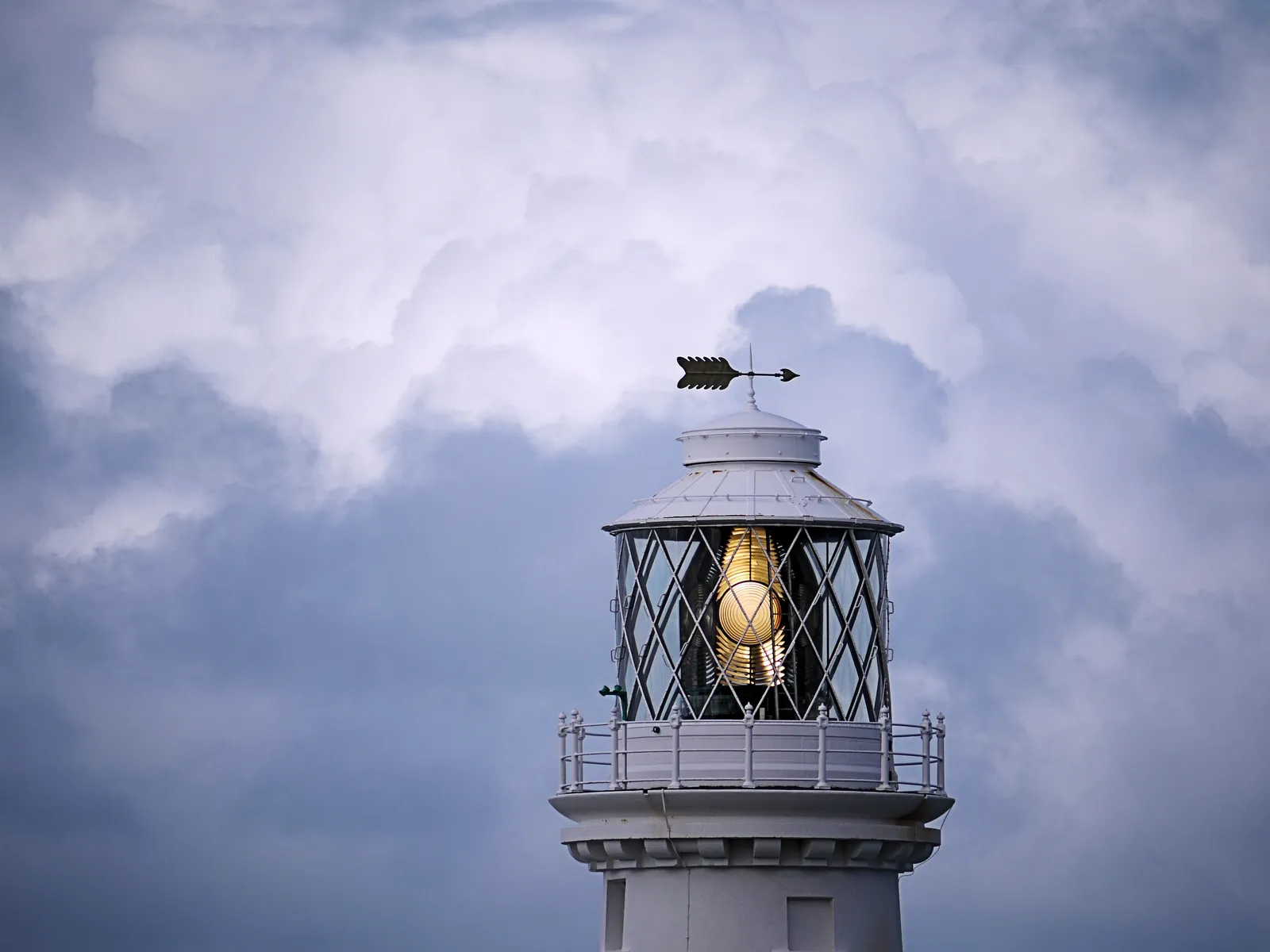
The way down — around 400 steps and the footbridge to the islandThe lighthouse from the cliffs — the landmark sits below youThe lantern lit — the working light at the top of the towerThe light and the keepers’ quarters on the rockElin’s Tower country — the seabird cliffs and the light beyond
What stays with you
The parts people remember
South Stack is not one view. It is a descent, and most of what you carry away is about edge and effort.
01
The lighthouse below you
The unusual first view: white tower and island far below the cliff path.
02
The descent
The switchback steps make the visit feel physical before you reach the bridge.
03
The bridge and the gap
The short crossing makes the separation from Holy Island obvious.
04
The birds on the cliffs
In spring the cliffs fill with guillemots, razorbills and puffins; choughs can appear year-round.
05
The climb back
The return is part of the experience. It isn’t effortless, and that’s the point.
People remember South Stack because the landmark made them work for it.
From the South Stack archive
A light, a gap, and a reserve.
Four field notes on what South Stack is — the 1809 light, the crossing, the seabird cliffs, and the working light today. Source-backed; where sources differ, we say so.
This is history kept honest. Where a date or detail is uncertain, it is flagged as uncertain rather than smoothed into a confident guess.
Field notes
Four entries. Open one to read the note.
The lighthouse Fact
A light first shown in 1809
Field note I · filed under the lighthouse
Trinity House built South Stack to mark the rock off Holy Island, and first showed its light on 9 February 1809.
What is known
Trinity House built the lighthouse in 1809 to mark South Stack Rock off the Anglesey coast, and its light was first shown on 9 February 1809. It was designed by the Trinity House surveyor Daniel Asher Alexander.
What the numbers say
Trinity House lists the tower as 28 m high and the light as 60 m above Mean High Water. Other accounts sometimes quote figures differently — go by the official Trinity House page.
What to notice there
From the cliff path the tower reads small against the sea. The scale only lands once you start down the steps towards it.
The gap Fact
The crossing
Field note II · filed under the bridge
South Stack Rock is separated from Holy Island by around 30 metres of turbulent sea — and getting across has always been the problem to solve.
What is known
South Stack Rock sits about 30 metres off Holy Island, with fast, turbulent water in the gap. Reaching the lighthouse today means descending roughly 400 steps and crossing a bridge when access is open.
The bridge over time
A bridge has spanned the gap since the nineteenth century and has been rebuilt more than once; an early suspension bridge is recorded here. Exact dates and rebuild history vary between sources.Bridge dates — sources differ
What to notice there
The crossing is short, but the moving sea beneath it makes the separation from Holy Island feel real.
The reserve Fact
The seabird cliffs
Field note III · filed under the reserve
South Stack is also an RSPB reserve — heathland, farmland and rocky sea cliffs that matter for seabirds, not just a lighthouse photo stop.
What is known
RSPB South Stack Cliffs takes in heathland, farmland and rocky sea cliffs, and is important for seabirds. RSPB says the cliffs are a breeding ground for guillemots, razorbills and puffins in spring, and choughs can be seen along the cliffs all year.
When to come
Spring and early summer are busiest for breeding seabirds; the choughs are the year-round constant. Elin’s Tower, the RSPB seabird hide, sits right on the cliffs.
What to notice there
Bring binoculars. The cliffs are loud and active in season, and the choughs — red-billed, acrobatic — are worth learning to spot.
Now Fact
The working light today
Field note IV · filed under operation
South Stack is no longer a place where keepers live — the light is automated and remotely operated.
What is known
The lighthouse is now automated and monitored remotely rather than staffed by resident keepers. Trinity House operates it as a working aid to navigation, and runs the visitor tours when conditions allow.
Where sources differ
Accounts disagree on the exact year, partly because “automated” and “keepers withdrawn” are not always the same date. Treat any single year with caution.Automation date — sources differ
What to notice there
It still earns its keep. The tour focuses on the lantern, the lens and the working maritime purpose — not nostalgia.
Continue exploring
Don’t let the day end at one pin.
Four stops that turn one lighthouse into a Holy Island day.